Storm Damage Documented Before the Adjuster Arrives
Storm and hail damage roof inspection in Daytona Beach for property owners navigating insurance claims after a wind or hurricane event
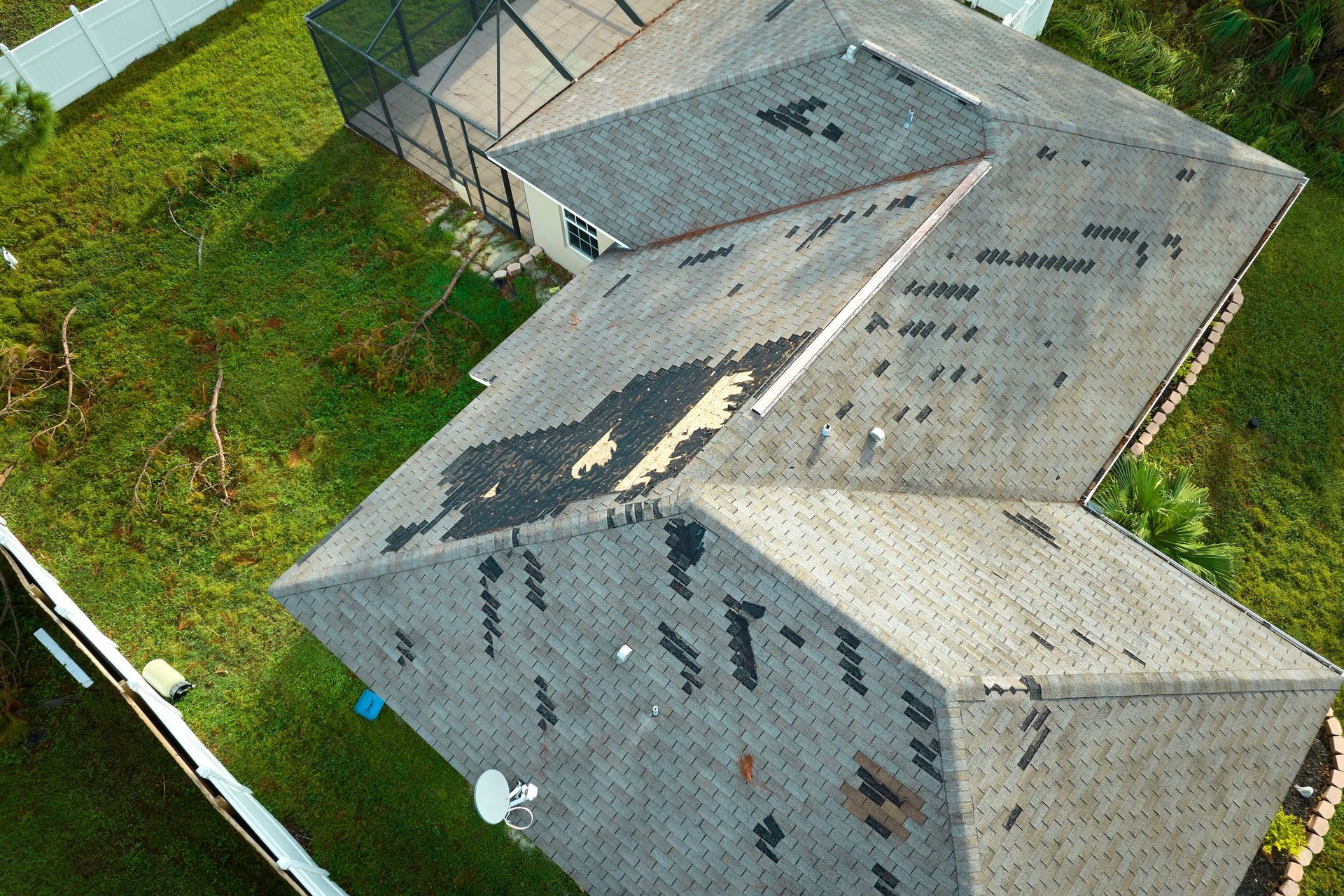
What changes after a hurricane or wind event has moved through Daytona Beach is often not visible from the ground: lifted flashing edges, granule loss concentrated at impact zones, and cracked field shingles that read as minor from street level but represent meaningful structural compromise from the roof surface. Waynes Roofing And Sheet Metal inspects storm and hail damage on residential and commercial roofs across Volusia County and meets the insurance adjuster on site to walk through the documented findings. The adjuster visit is where the scope of a repair or replacement claim gets set, and having a roofer present who has already documented the damage from the roof surface is how the scope reflects what the roof actually needs rather than what is easiest to see quickly from below.
The process begins with the company inspecting the roof and documenting the damage before the adjuster comes out. That documentation—covering flashing, field material, penetrations, and any areas where the membrane or shingles have been physically disturbed—gives the negotiation a factual baseline. The customer files the claim with their insurance company; Waynes Roofing And Sheet Metal negotiates the repair or replacement scope with the adjuster on the customer's behalf during the on-site meeting.
Contact Waynes Roofing And Sheet Metal to have the roof inspected and the damage documented before you schedule the adjuster visit.
Why the Adjuster Meeting Determines the Repair Scope
Insurance adjusters evaluating roofs after a storm event work from what is visible and documentable at the time of their visit. Damage that is not pointed out, photographed, and explained in trade terms during that visit can be excluded from the initial claim scope, leaving the property owner responsible for repairs that should have been covered. The crew at Waynes Roofing And Sheet Metal has worked Volusia County storm damage for many years and understands how to walk an adjuster through flashing failures, impact damage, and uplift effects in a way that produces an accurate scope rather than a minimum one.
After the adjuster meeting and claim negotiation, property owners can see the difference between an accurately scoped claim and a minimized one: the written scope covers the full extent of what was documented on the roof surface, including secondary damage at penetrations and valleys that storm events routinely affect alongside the more obvious field damage. That difference shows up in whether one visit to the roof resolves the problem or whether additional failures appear in the months following the initial repair.
Ormond Beach properties, which include a mix of older single-family homes and beachside structures that have been through multiple storm cycles, often present damage patterns that reflect prior incomplete repairs as well as new storm impact. Separating pre-existing conditions from new storm damage is a practical part of the adjuster conversation, and having a roofer present who can identify both prevents the insurer from attributing current damage entirely to prior conditions.
Common Questions About This Service
Property owners in Daytona Beach dealing with roof damage after a storm event often have questions about how the inspection and claims process works and what role the roofing contractor plays in it.
What does the pre-adjuster inspection actually document?
The inspection covers the full roof surface, cataloging damage at flashing, penetrations, ridgeline, valleys, and field material, with photographs and notes that describe the failure type at each location rather than a summary count of affected squares.
How does the roofer's presence at the adjuster meeting affect the claim outcome?
The roofer can point out damage that is not immediately visible to the adjuster, explain the structural significance of flashing failures and impact patterns in technical terms, and provide the documentation gathered during the prior inspection as supporting evidence for the scope being negotiated.
Why is hail damage sometimes harder to identify than wind damage?
Hail impact shows as granule loss concentrated in circular patterns, bruising to the shingle mat beneath, and cracking that may not yet have produced a visible leak, all of which require access to the roof surface to identify accurately from close range.
What is the homeowner's role in the process while the roofer handles the adjuster meeting?
The homeowner files the claim with their insurance company and is present or reachable during the adjuster visit; the roofer manages the technical conversation about scope while the homeowner remains the policyholder directing the claim.
How does the documented damage inspection in Daytona Beach account for damage that spans multiple roof sections or systems?
The inspection is not limited to one area of the roof; wind and hail events affect the entire roof surface, so the documentation covers all sections including transitions between flat and sloped areas where two different roof systems meet.
Waynes Roofing And Sheet Metal also handles storm and hail damage inspections in Ormond Beach, Holly Hill, Port Orange, DeLand, and Ponce Inlet. To have the roof documented before the adjuster visit, call (386) 255-3633.