Metal Roofing Fabricated and Installed in One Operation
Sheet Metal Roof in Daytona Beach for homes and commercial properties moving off aging shingle systems at end of service life
Older shingle homes near the Daytona Beach coastline have a specific decision point when those roofs reach end of life: replace with another shingle system on the same approximate cycle, or move to a metal roof that carries a fundamentally different lifespan. Wayne's Roofing and Sheet Metal installs sheet metal roofing in Daytona Beach and throughout Volusia County, fabricating the trim and flashing components in its own in-house sheet metal shop rather than using off-the-shelf pieces that are cut to approximate rather than actual dimensions. That in-house fabrication is what makes the fit at every edge, valley, and penetration a custom result rather than a standard assembly.
Installation begins with a prepared and inspected deck. Decking that is soft or rotted is replaced before the metal goes on, as code requires, because metal roofing fastened into compromised decking does not hold at the pull-out values required under wind-load specifications. The trim and flashing are then fabricated to the specific dimensions of the roof being covered—not trimmed from stock pieces—and installed as an integrated system with the metal panels.
Arrange an inspection of your current roof and deck condition to determine what the installation would involve and whether decking replacement is part of the scope.
The Difference Between Custom Fabrication and Off-the-Shelf Assembly
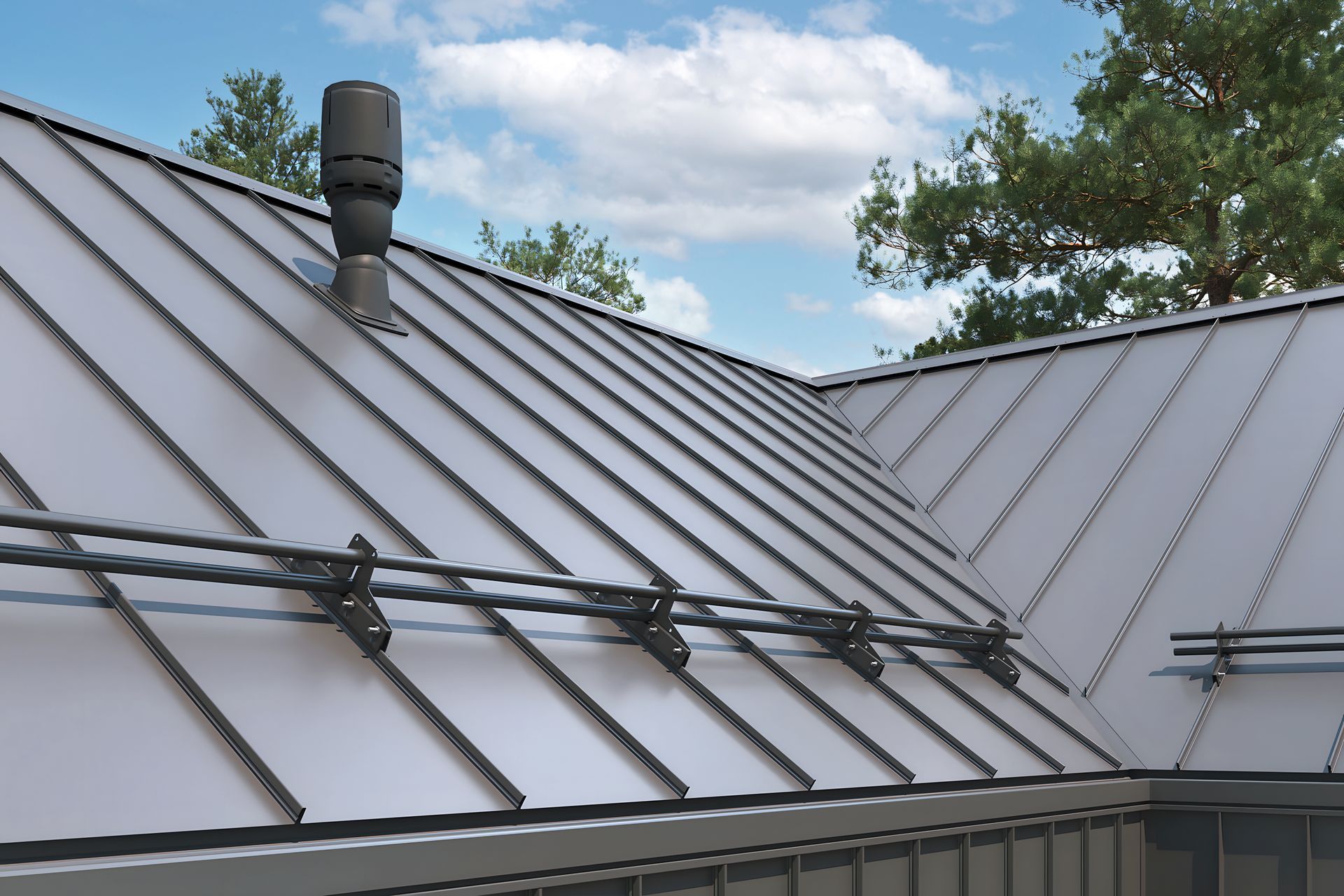
Metal roofing installed with fabricated-to-fit trim and flashing performs differently at the details than metal installed with standard-dimension stock pieces. Valleys, rake edges, ridge caps, and penetration flashings are the points where a roof either sheds water cleanly or allows it to travel under the panel. When those components are fabricated to match the actual geometry of the roof rather than bent to approximate it on site, the fit at each detail is tighter and the flashing functions as it was designed to rather than as a modified version of something close enough.
Once the installation is complete, the visible result is a roof with consistent panel alignment, clean edge terminations, and flashing that sits flush against each penetration and transition. The longer-term result is a roof expected to last at least 50 years, compared with approximately 35 years for shingles—a difference that changes the cost calculation over the life of the building, particularly for homeowners in the Port Orange and Holly Hill areas who are replacing shingle roofs that have already been replaced once or twice on the same structure.
The in-house sheet metal shop also means that non-standard conditions—unusual roof pitches, architectural details, or integration with existing gutters and fascia—are handled without sourcing specialty pieces from an outside fabricator. Whatever the roof geometry requires, the components are built to those dimensions before installation begins rather than adapted during it.
What Homeowners Ask About Metal Roof Installation
These questions address how sheet metal roofing is installed, what the deck inspection involves, and why fabricated-to-fit components produce a different result than stock pieces assembled on site.
Why is the deck inspection a required step before metal roofing is installed?
Metal panels are fastened directly into the decking, and those fasteners have to achieve specific pull-out resistance values under wind-load requirements—soft or rotted decking cannot hold a fastener at those values, so any compromised sections must be replaced before installation begins, as code requires.
How does fabricating trim and flashing in a sheet metal shop differ from cutting stock pieces on site?
Shop fabrication allows each component to be built to the precise dimensions of the actual roof geometry before installation begins, while field-cut stock pieces are adapted from standard lengths that may not match the specific angle, width, or profile required at that detail.
What should be inspected in a finished metal roof installation to confirm the flashing was done correctly?
At every penetration, the flashing should wrap the base of the penetration and integrate under the panel above and over the panel below—any gap between the flashing and the panel surface at a penetration is a point where water can travel under the metal.
How does the longer lifespan of a metal roof affect the replacement decision for a shingle home reaching end of life?
A shingle roof replaced today will reach end of life again in approximately 35 years, while a metal roof installed now is expected to last at least 50 years—for homeowners who have already replaced a shingle roof once, the additional longevity changes both the number of future replacements and the total cost over the building's remaining service life.
What happens to existing gutters and fascia when a metal roof is installed?
The interface between the new roof panel, the drip edge, and the existing gutter system has to be detailed so water discharges into the gutter rather than behind it—fabricated drip edge components matched to the actual fascia profile are the standard approach for a correct termination at that edge.
Wayne's Roofing and Sheet Metal also installs sheet metal roofing in Ormond Beach, Holly Hill, Port Orange, DeLand, and Ponce Inlet. To discuss your roof replacement and have the deck and existing system evaluated, call Wayne's Roofing and Sheet Metal at (386) 255-3633 with the approximate age of your current roof and any known deck issues noted.