Flat Roofs That Hold Up After Coating
Roof Coating in Daytona Beach for aging flat and low-slope roofs with substrate damage or active surface deterioration
Wayne's Roofing and Sheet Metal applies roof coatings to flat and low-slope roofs in Daytona Beach, starting every project with a thorough inspection of the roof's age and existing condition. Not every flat roof qualifies for coating—if the substrate is compromised, a coating applied over it will fail prematurely, and identifying that early prevents unnecessary expense. That inspection-first approach is how the work stays worth doing.
Before any coating material goes on, the substrate is repaired. This sequencing matters because a coating bonds to what is underneath it, and soft or saturated sections will cause the coating to separate even when the product itself is correctly applied. Commercial flat roofs on beachside buildings in Daytona Beach frequently carry rooftop air conditioning equipment and other mechanical loads, which create penetrations and flashing details that have to be addressed as part of the prep work, not as an afterthought.
Schedule an on-site inspection to determine whether your flat roof is a candidate for coating and what substrate work would be required first.
What Proper Roof Coating Requires
Roof coating is not a surface-level fix applied to any roof that has started showing wear. The process begins with a condition assessment that categorizes the roof by age, ponding history, membrane integrity, and the condition of penetrations and seams. Roofs that cannot hold a coating are identified at this stage, and those property owners are directed toward a replacement path rather than paying for a coating application that will not last. Wayne's Roofing and Sheet Metal does not coat roofs that cannot accept the material.
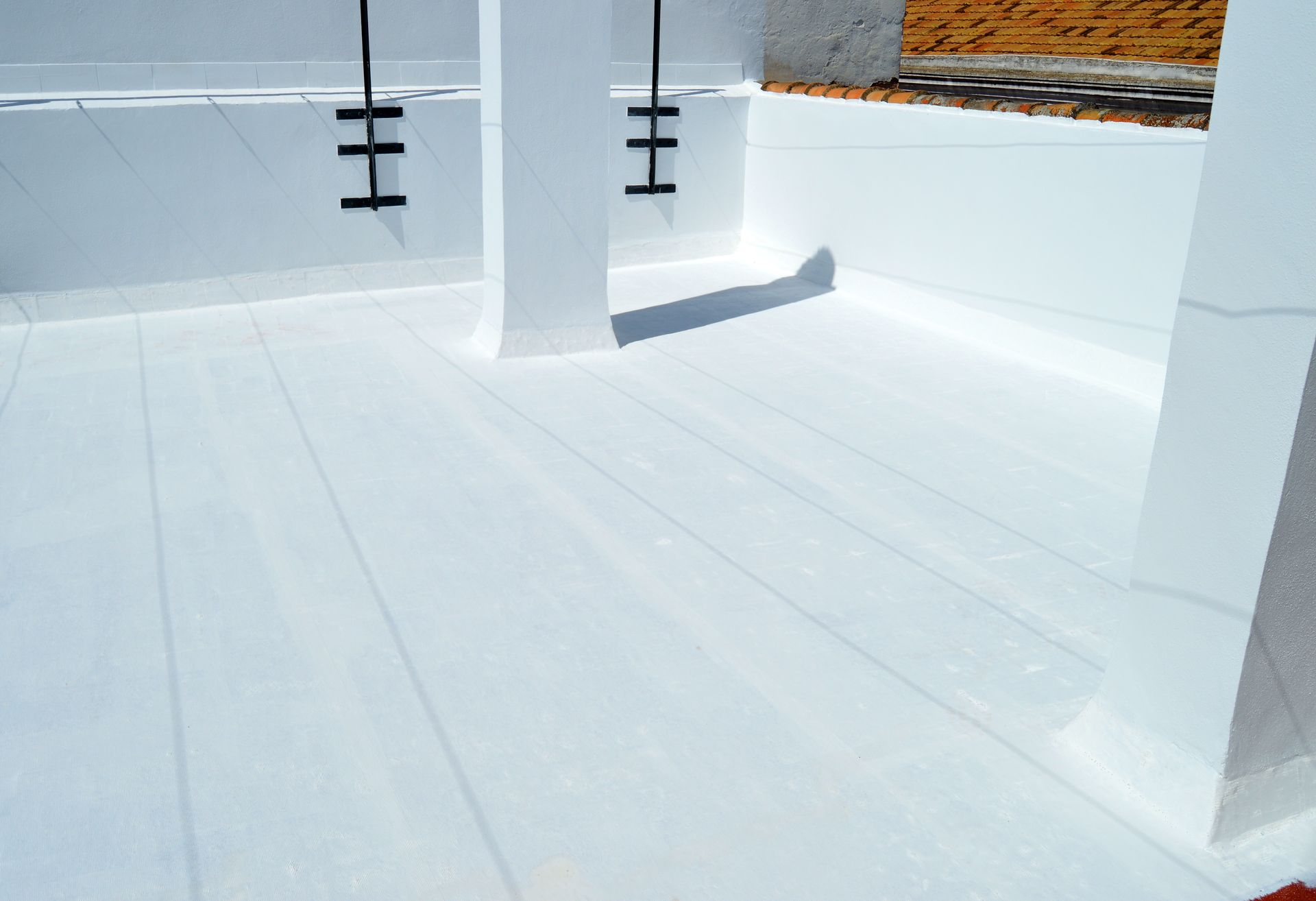
Once the substrate is confirmed sound and any failing sections are repaired, the coating is applied in a way that gives the building a sealed, reflective surface across the entire field of the roof. After the work is complete, you will notice that previously visible cracking, bubbling, or exposed seams are covered and sealed, and that surface water moves toward drains rather than collecting in low spots over weakened membrane sections.
Older low-slope commercial roofs on beachside structures often have layered repair history, which means the inspection has to account for what earlier contractors applied before the current visible surface. That history affects what the coating will bond to and whether additional prep work is needed before the project can proceed.
Common Questions About Roof Coating Work
These questions address how roof coating projects are evaluated and completed, including what determines whether a flat roof is a viable candidate and what the finished work involves.
What makes a flat roof a candidate for coating rather than replacement?
A roof qualifies for coating when the substrate is structurally sound and the membrane has not deteriorated past the point where it can hold a bond—if moisture has saturated the insulation or decking, replacement is the appropriate path rather than a coating applied over unstable material.
How is the substrate prepared before coating is applied?
Failing seams, open cracks, and soft sections are repaired first, and penetrations around rooftop equipment are re-flashed so the coating has a continuous, intact surface to bond to rather than bridging over unresolved defects.
Why do rooftop equipment penetrations require special attention during coating?
Each penetration is a point where the membrane has been cut and sealed, and those seals deteriorate independently from the field of the roof—coating over an already-failed penetration seal does not restore the seal, so each one has to be evaluated and addressed before the coating goes on.
What should you look for in a flat roof to know whether surface coating has already failed?
Bubbling or lifting at seams, areas where the coating has pulled away from the substrate, and standing water that does not drain within 48 hours after rain are all indicators that a previous coating application has separated from the surface beneath it.
How do Daytona Beach commercial buildings with layered repair histories affect the coating assessment?
Older commercial roofs in the area frequently have multiple previous coatings or patch applications, and each layer has to be evaluated for adhesion before a new coating can go on—the inspection identifies whether the existing surface is stable enough to serve as the bonding substrate.
Wayne's Roofing and Sheet Metal also applies roof coatings in Ormond Beach, Holly Hill, Port Orange, DeLand, and Ponce Inlet. To find out whether your flat roof qualifies for coating, arrange an inspection with Wayne's Roofing and Sheet Metal and receive a documented assessment of what the roof requires before any material is applied.