Rooftop Equipment Lifted Without Improvisation
Crane service in Daytona Beach for roof-mounted air conditioning equipment that cannot be set by ladder or stairwell
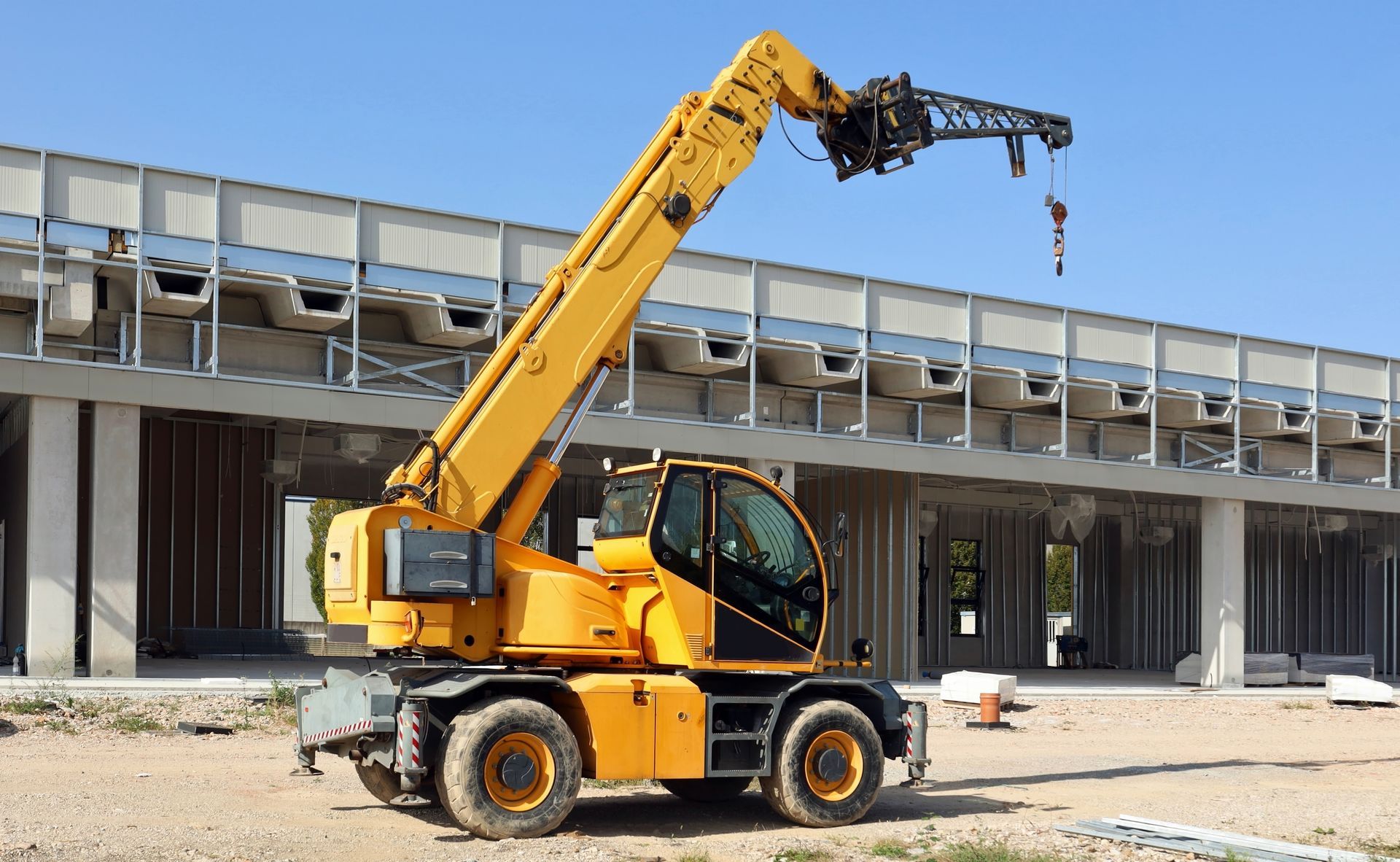
A commercial rooftop air conditioning unit weighs several hundred pounds and sits on a curb that may be six, seven, or eight stories above street level. Getting that unit onto the roof is not a rigging problem that can be improvised with a boom truck borrowed for the day. Wayne's Roofing and Sheet Metal owns a boom crane that reaches eight stories and deploys it for roof-mounted equipment lifts in Daytona Beach, working alongside air conditioning contractors to set or replace units in a single coordinated operation. The company's own crew runs the crane, which means the lift is controlled by people who understand rooftop conditions and equipment placement, not a separate crane service that arrives without that context.
Every lift is scheduled around the building's occupancy, which matters on commercial and multi-story properties where access points, parking areas, and tenant activity all affect where the crane can be positioned and when the work can proceed. The air conditioning contractor coordinates directly with Wayne's Roofing and Sheet Metal's crew so that the unit is staged, lifted, and set on the roof in one sequence rather than broken into separate site visits.
To schedule a crane lift for a rooftop equipment installation, speak with Wayne's Roofing and Sheet Metal directly about your building's access and equipment specifications.
What Proper Crane Lifts Require on Commercial Rooftops
Positioning a boom crane for a rooftop lift involves more decisions than simply parking below the target and extending the boom. The crane must be placed where the load path clears any parapet, rooftop obstruction, or overhead utility line, and the outriggers must be set on stable ground that can carry the crane's weight under load. On multi-story buildings in Ormond Beach and Daytona Beach, that assessment happens before the lift date so that the operation does not stop once the equipment arrives on site.
Once the unit is set, the visible result is straightforward: the equipment is on its curb, correctly positioned for the air conditioning contractor to complete the connections. What the building owner or property manager will not see is the field adjustment that happens when a lift is attempted without proper reach or rigging—units set off-center from their curb, roofing disturbed by an improvised approach, or a lift that requires a second attempt because the initial positioning was wrong. Wayne's Roofing and Sheet Metal's eight-story reach means the crane does not run short on most commercial building heights common in this market.
Crane availability is coordinated with the air conditioning contractor's installation schedule. Because the lift and the equipment installation happen together rather than on separate days, the roof is not left open between operations, which is a relevant consideration on occupied buildings where access needs to be controlled.
Answers About the Crane and Lift Process
The following questions address how the crane lift process works for rooftop air conditioning equipment, including what contractors and property managers need to know before the work begins.
How high can the crane reach on a commercial building?
The boom crane owned by Wayne's Roofing and Sheet Metal reaches eight stories, which covers the height range of most commercial and multi-story residential buildings where rooftop equipment lifts are required in this market.
How is the crane positioned on a building with limited parking or access?
The crew assesses the site before the lift date to identify where the crane can be set with outriggers on stable ground and with a clear load path over the parapet. Buildings with constrained access require this step to avoid delays on lift day.
What role does Wayne's Roofing and Sheet Metal's crew play during the lift?
The company's own crew operates the crane and manages the lift. The air conditioning contractor handles the equipment connections once the unit is set. The two crews coordinate so that the operation moves in a single sequence from staging to placement.
When is crane work required instead of manual methods?
Any rooftop unit that cannot be walked up a stairwell or safely carried by ladder requires a crane. For most packaged rooftop units on commercial buildings of three stories or more, a crane is the standard approach rather than an alternative.
How does building occupancy affect lift scheduling?
Lifts are scheduled around occupancy patterns so that the crane position and staging area do not conflict with tenant traffic, deliveries, or building entry points. On occupied buildings, this coordination is arranged in advance with the property manager.
Wayne's Roofing and Sheet Metal also performs crane lifts for rooftop equipment in Ormond Beach, Holly Hill, Port Orange, DeLand, and Ponce Inlet. Call (386) 255-3633 to discuss your building's specifications and arrange a lift with the company's crew.